

Mental health matters! Your mental health influences how you think, feel, connect with others, handle stress, and move through life. It shapes your relationships, your sense of purpose, and your ability to cope when things feel overwhelming.
For many people, mental health challenges are a quiet part of life. You may still show up to work or school, care for your family and pets, and keep things moving on the outside, while struggling internally with anxiety, depression, stress, or emotional exhaustion. That disconnect is one reason mental health often goes unaddressed, even though it plays a vital role in overall health and well-being.
Globally and in the United States, mental health conditions are increasingly common, yet access to quality mental health treatment and therapy services remains limited for many individuals and families. Understanding the scope of the issue and what support can look like are important steps toward change.
The current state of mental health around the world
Mental health disorders affect people of all ages, cultures, and backgrounds. According to the World Health Organization, nearly one in seven people worldwide lives with a mental health condition, making mental illness one of the leading causes of disability globally [1].
Anxiety disorders and depression are among the most prevalent mental health conditions worldwide, often beginning in adolescence or early adulthood and continuing throughout life if left untreated [1]. These challenges affect emotional well-being, physical health, social well-being, and your ability to engage in life fully.
Despite how widespread these conditions are, access to mental health services varies significantly across regions. Many countries face shortages of trained providers, limited funding for mental health care, and ongoing stigma that prevents people from seeking treatment [1]. As a result, millions of people go without the support they need.
Related: Destroying the Stigma of Mental Health Disorders
Mental health in the United States
In the U.S., mental health challenges are both common and deeply impactful. Recent data shows that more than one in five U.S. adults experiences a mental illness each year, representing over 60 million people [2]. Among them, approximately 5–6% live with serious mental illness, meaning symptoms significantly interfere with daily functioning, relationships, or work [2].
Mental health challenges also affect children and teens. Nearly one in five adolescents has a diagnosable mental health condition, yet many never receive treatment [3]. Early experiences with anxiety, depression, trauma, or mood disorders can shape emotional development, academic performance, and long-term well-being.
Even with growing awareness, access to mental health care remains a major barrier. Many people delay or avoid seeking treatment due to:
- Stigma surrounding mental illness
- Limited insurance coverage or high out-of-pocket costs
- Shortages of mental health professionals
- Lack of accessible care within local communities
As a result, a significant number of people experiencing a mental health crisis never receive timely or appropriate support [4].
If mental health is affecting your daily life, you don’t have to navigate it alone. Contact our mental health experts today to discuss your treatment options.
What is mental health, really?
Mental health includes your emotional, psychological, and social well-being. It influences how you process feelings, respond to stress, relate to others, and make decisions throughout life [3]. Just like physical health, mental health exists on a spectrum and can change over time based on experiences, environment, and available support.
Also, mental health is closely connected to physical health. Chronic stress, untreated depression, and ongoing anxiety can increase the risk of physical conditions such as heart disease, diabetes, and obesity, while physical illness can also affect mental well-being [3]. Supporting mental and physical health together is important for overall health.
Related: What is Behavioral Health?
Mental illness and common mental health disorders
Mental illness refers to diagnosable mental health conditions that affect mood, thinking, behavior, or emotional regulation. These conditions vary in severity and duration, and many are highly treatable with proper care.
The most common mental health disorders include:
- Anxiety disorders, such as generalized anxiety, panic disorder, and social anxiety
- Depression, including major depressive disorder and persistent depressive disorder
- Bipolar disorder, which involves shifts in mood, energy, and activity levels
- Post-traumatic stress disorder (PTSD), which can develop after experiencing trauma
Symptoms may include changes in mood, difficulty concentrating, withdrawal from relationships, sleep disruptions, or overwhelming feelings that interfere with daily life [3].
Related: What Causes Mental Illness?
What are the 4 types of mental health?
Mental health is often understood through four interconnected areas:
- Emotional health, or your ability to understand and manage feelings
- Psychological health, including coping skills and resilience
- Social well-being, shaped by relationships, community, and support systems
- Behavioral health, which includes habits that affect daily functioning
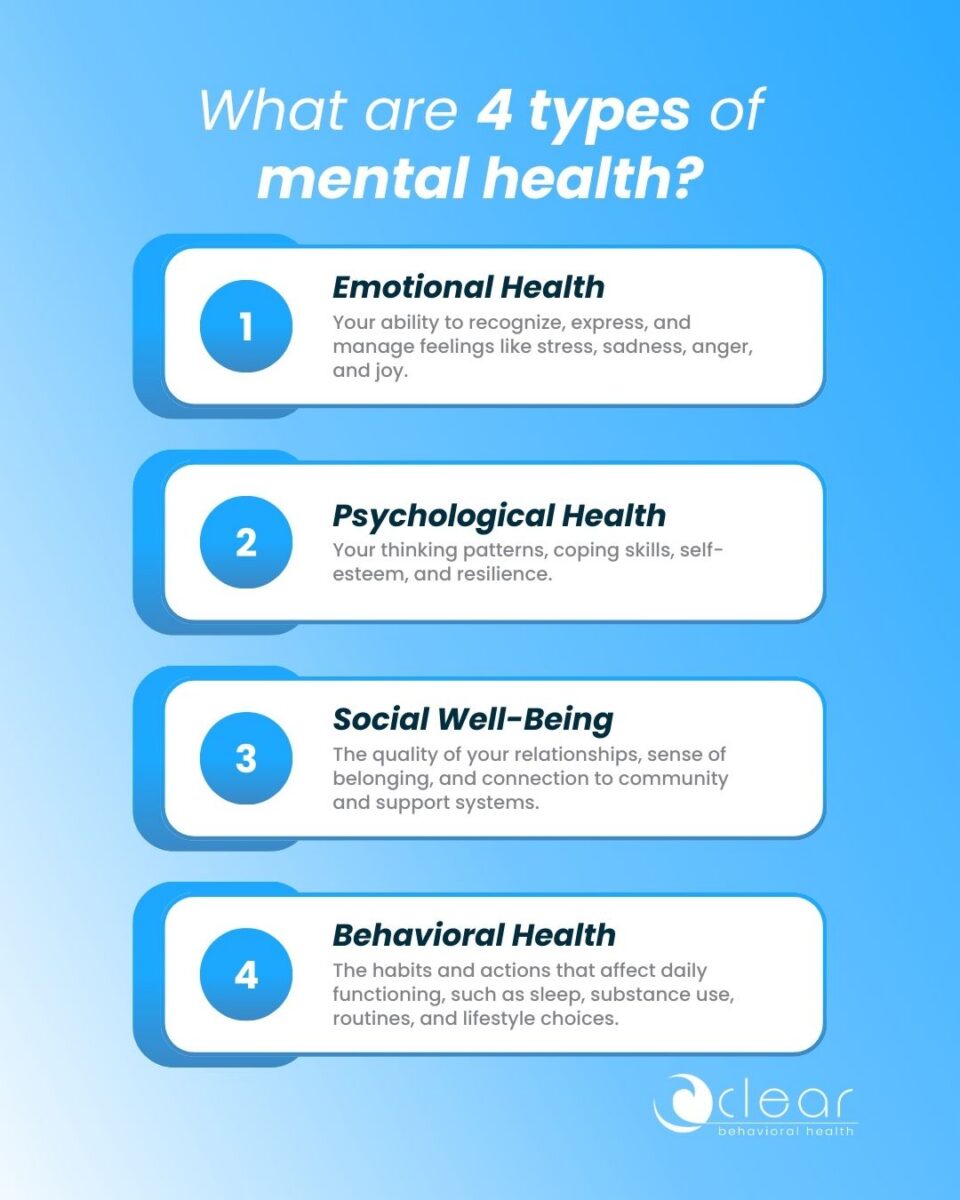
When one area is struggling, it can affect the other areas. This is one of the many reasons why comprehensive mental health care looks at the whole person, not just isolated symptoms.
Why is mental health important in our lives?
Mental health matters because it affects how you experience life as a whole. When mental health challenges go untreated, they can influence relationships, work performance, academic success, and physical health outcomes. They can also increase the risk of substance use, chronic stress, and feelings of isolation [3].
On the other hand, good mental health supports emotional balance, stronger connections, better stress management, and a greater sense of purpose. Prioritizing mental health is about building stability, self-awareness, and support over time.
How does mental health affect quality of life?
Mental health directly shapes quality of life. When you feel emotionally supported and mentally well, you’re more likely to engage meaningfully with others, manage challenges effectively, and recover more quickly from setbacks.
Untreated mental health conditions can affect motivation, decision-making, and physical well-being, sometimes leading to a cycle where mental and physical health decline together. Access to treatment, education, and community resources can make a significant difference in long-term outcomes [4].
What is good mental health?
Good mental health doesn’t mean you never feel stressed, anxious, or sad. It means you have the skills, support, and self-awareness to navigate those feelings in healthy ways.
Signs of good mental health may include:
- Emotional awareness and regulation
- Healthy coping skills during stress
- Supportive relationships
- A sense of meaning or direction
- Willingness to seek help when needed
Mental wellness looks different for everyone and can evolve across different stages of life.
How to improve your mental health
Improving mental health often involves small, consistent steps rather than one major change. Helpful strategies include building routines that support well-being, learning stress-management skills, and staying connected to supportive people.
Professional mental health services, including therapy and outpatient programs, can provide guidance, tools, and accountability. This type of support can be especially helpful during periods of increased stress, anxiety, or emotional difficulty [5].
If your mental health symptoms are overwhelming or persistent, help and understanding are within reach. Contact our team of trusted professionals
How Clear Behavioral Health helps you prioritize mental health
At Clear Behavioral Health, we believe mental health matters at every stage of life. Our mental health treatment programs are designed to provide accessible, evidence-based mental health care that meets you where you are.
Through individualized treatment planning, we offer support that may include individual therapy, group therapy, family therapy, parent support groups, and evidence-based approaches such as CBT and DBT. Our programs also integrate holistic practices like mindfulness, breathwork, yoga, sound baths, and physical activity to support whole-person wellbeing.
By addressing emotional, psychological, and social health together, we help you build resilience, develop coping skills, and move forward with greater stability and confidence.
If you or a loved one is experiencing mental health challenges or having a hard time prioritizing mental health, contact us today. We offer a full continuum of care for mental health treatment, including residential mental health treatment, Virtual IOP available throughout California, and outpatient mental health programs.
Our outpatient programs are conveniently located in the Los Angeles area, including PHP and IOP in El Segundo, Van Nuys, Pasadena, El Monte, Santa Clarita, and Redondo Beach. Reach out today to get the support and care you deserve. We’ll be with you every step of the way on your journey to lasting mental wellness.
References
- World Health Organization: WHO. (2025, September 30). Mental disorders. https://www.who.int/news-room/fact-sheets/detail/mental-disorders
- Mental Health America. (2026, January 26). The State of Mental Health in America | Mental Health America. https://mhanational.org/the-state-of-mental-health-in-america/
- About mental health. (2025, June 9). Mental Health. https://www.cdc.gov/mental-health/about/index.html
- Modi, H., Orgera, K., & Grover, A. (2022). Exploring Barriers to Mental Health Care in the U.S. Association of American Medical Colleges. https://doi.org/10.15766/rai_a3ewcf9p
- Mental illness. (n.d.). National Institute of Mental Health (NIMH). https://www.nimh.nih.gov/health/statistics/mental-illness