

Social media is part of everyday life. It helps you stay connected, express yourself, and keep up with friends, family, and the world around you. For many people, social media platforms provide a sense of belonging and social support. But for others, time spent online can leave you feeling tense, overwhelmed, or more anxious than before.
If you’ve ever noticed your anxiety increase after scrolling, comparing yourself to others, or constantly checking notifications, you’re not alone. Research continues to shed light on the complex relationship between social media and anxiety. Certain patterns of social media use can contribute to social media anxiety, especially among teens and young adults.
If anxiety is starting to interfere with your life, support is available. You deserve tools and guidance that help you feel grounded and confident again.
How common is social media use today?
Social media use is nearly universal, especially among young people. According to the U.S. Department of Health and Human Services, nearly half of adolescents report being online “almost constantly,” and most teens use multiple social media apps each day [1]. For many teens and young adults, social media has become deeply integrated into daily life, communication, and identity development.
This widespread use is one reason mental health professionals are paying closer attention to how social media usage may impact emotional well-being, anxiety levels, and long-term mental health outcomes.
Does social media cause anxiety?
There is no single, simple answer, but research consistently shows a strong association between social media use and anxiety symptoms [1,2]. While social media does not automatically cause anxiety for everyone, certain behaviors and experiences online are linked with higher levels of stress, worry, and social anxiety.
The U.S. Surgeon General has emphasized that spending more than three hours per day on social media is associated with increased risk for anxiety and depression symptoms in young people [1]. This does not mean social media is inherently harmful, but it does highlight that how and how much you engage online matters.
Related: Social Media and Mental Health
How does social media cause anxiety?
Researchers have identified several ways social media can heighten feelings of anxiety, particularly when use becomes excessive or emotionally charged.
Constant social comparison
Social media often presents curated highlights rather than real life. Repeated exposure to filtered images, success stories, and idealized body image standards can lead to constant social comparison. Over time, this can negatively affect self-esteem, contribute to low self-esteem, and increase anxiety. This is especially true if you already struggle with self-doubt or social anxiety [2].
Passive scrolling vs. active engagement
Not all social media use affects mental health in the same way. Studies suggest that passive behaviors, such as scrolling without interacting, are more strongly associated with anxiety and negative emotions. In contrast, active use, like meaningful conversations or supportive interactions, may offer social support and positive emotions when used intentionally [2].
Fear of missing out (FOMO) and persistent worry
Seeing friends socialize, attend events, or hit milestones can trigger fear of missing out. This can lead to persistent worry about social standing, friendships, or whether you’re doing enough in life. For many teens and young adults, this ongoing pressure can contribute to social media-induced anxiety.
Sleep disruption and physical symptoms
Spending time scrolling late at night can disrupt sleep patterns and reduce sleep quality. Poor sleep is closely linked to increased anxiety, difficulty concentrating, and physical symptoms like headaches or fatigue, which can further affect mental health and physical health [1].
Online harassment and harmful content
Exposure to online harassment, cyberbullying, or harmful content can significantly impact well-being. Negative interactions online may heighten feelings of stress, fear, and anxiety, particularly for young people who are still developing coping skills [1,5].
What are the signs and symptoms of social media anxiety?
Experiencing social media anxiety can look different from person to person. You might notice:
- Feeling anxious or tense after spending time on social media
- Constantly checking social media for updates or validation
- Worrying about likes, comments, or how posts are perceived
- Feeling bad about your body image, life progress, or relationships
- Difficulty unplugging, even when social media increases stress
- Avoiding real-life interactions due to online comparison
If these patterns sound familiar, they may be signs that your social media habits are affecting your mental health.
Related: What is Anxiety?
Social media anxiety in teens vs. adults
Teens and youth mental health
For many teens, social media plays a major role in identity formation, friendships, and self-expression. Heavy social media use can replace offline activities, disrupt sleep, and intensify peer comparison. Health and human services experts have linked these patterns to rising youth mental health concerns and a broader mental health crisis [1].
Related: Identifying the Signs of Anxiety in Teens – and When to Get Help
Adults and young adults
Adults are not immune to social media anxiety. College students and young adults often report anxiety related to social comparison, career pressure, body image concerns, and maintaining social connections online. Balancing real-life responsibilities with constant notifications can increase stress and make anxiety harder to manage.
Can deleting social media help anxiety?
For some people, deleting social media or taking extended breaks can reduce anxiety, especially if social media use involves constant comparison, poor sleep quality, or compulsive checking. For others, completely leaving social media may feel unrealistic or isolating.
In many cases, focusing on healthy social media use is more sustainable. This may include setting time limits, reducing screen time, being mindful of content you engage with, and prioritizing real-life interactions and offline activities.
Related: A Parent’s Guide to Helping Teens Manage Their Social Media Use for Better Mental Health
Practical tips to manage social media anxiety
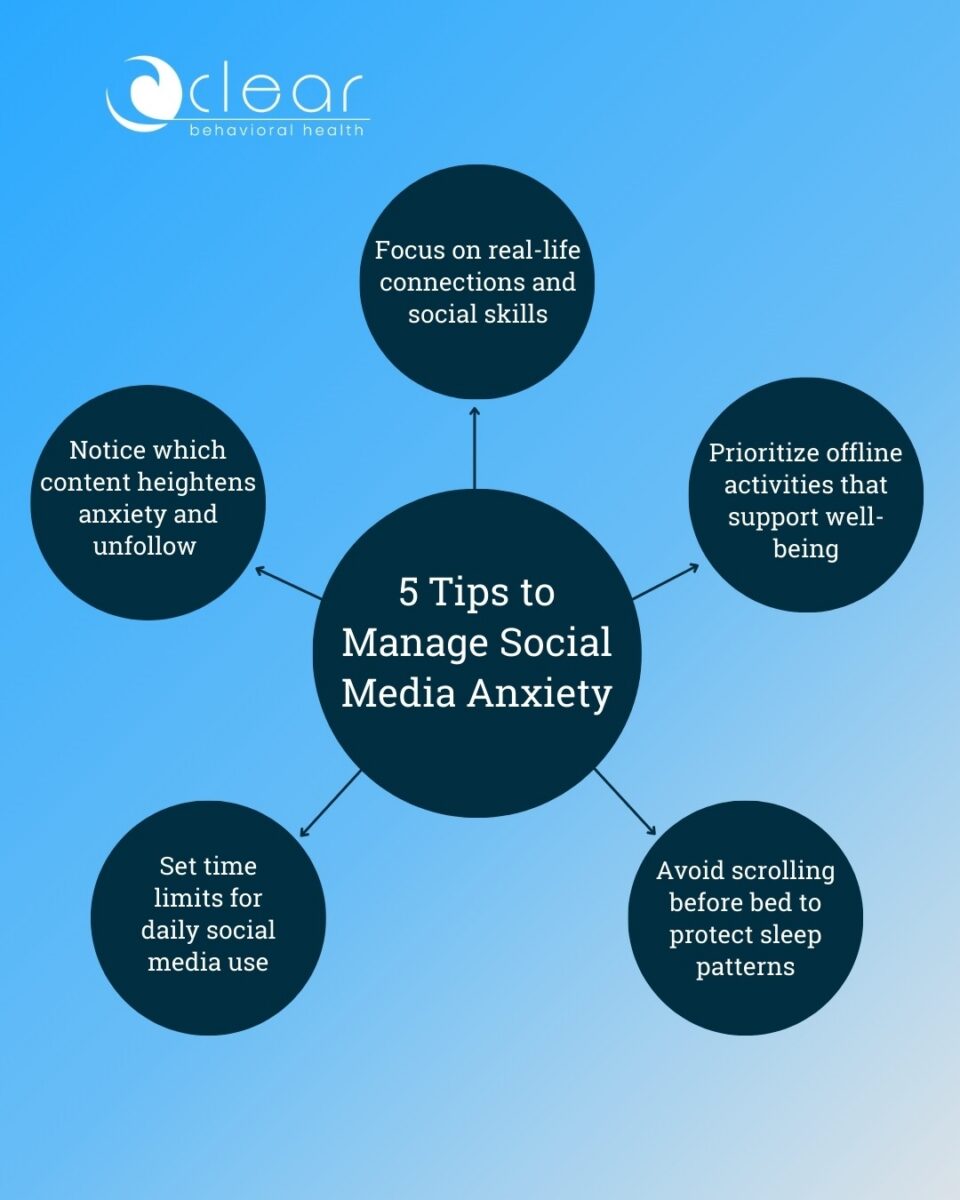
If you want to manage social media anxiety without disconnecting entirely, consider these practical tips:
- Set time limits for daily social media use
- Notice which content heightens anxiety and unfollow when needed
- Prioritize offline activities that support well-being
- Avoid scrolling before bed to protect sleep patterns
- Focus on real-life relationships and social skills
Small changes in digital habits can make a meaningful difference over time.
Related: What are Coping Skills for Anxiety?
You don’t have to navigate anxiety on your own. Support and effective treatment options are available to help you feel more balanced and confident again.
How Clear Behavioral Health supports anxiety treatment
Clear Behavioral Health offers comprehensive outpatient anxiety treatment for teens and adults. Our individualized programming is designed to help you understand anxiety triggers, develop healthier coping skills, and improve overall well-being.
Treatment options include individual therapy, group therapy, family therapy, parent support groups, and evidence-based approaches such as CBT and DBT. We also incorporate holistic methods, including mindfulness, yoga, breathwork, soundbaths, and physical activity to support both mental health and physical health.
If you or a loved one is experiencing heightened anxiety, contact us today. We provide anxiety treatment for adults and teens in the Los Angeles area, as well as Virtual IOP for adults all throughout California. In-person mental health treatment is available in multiple locations, including Redondo Beach, El Segundo, Mid-Wilshire, Pasadena, Van Nuys, El Monte, and Santa Clarita. You can overcome social media anxiety, and we’d be happy to support you on your journey to healthier habits and lasting mental wellness.
References
- General, O. O. T. S. (2025, February 19). Social media and youth mental health. HHS.gov. https://www.hhs.gov/surgeongeneral/reports-and-publications/youth-mental-health/social-media/index.html
- Lai, F., Wang, L., Zhang, J., Shan, S., Chen, J., & Tian, L. (2023). Relationship between Social Media Use and Social Anxiety in College Students: Mediation Effect of Communication Capacity. International Journal of Environmental Research and Public Health, 20(4), 3657. https://doi.org/10.3390/ijerph20043657
- School, S. L. (2024, May 20). Social Media Addiction and Mental Health: The Growing Concern for Youth Well-Being | Stanford Law School. Stanford Law School. https://law.stanford.edu/2024/05/20/social-media-addiction-and-mental-health-the-growing-concern-for-youth-well-being/
- Weir, K. (n.d.). Social media brings benefits and risks to teens. Psychology can help identify a path forward. https://www.apa.org. https://www.apa.org/monitor/2023/09/protecting-teens-on-social-media
- Adolescent Counseling Services. (2025, January 13). The impact of social media on teen social anxiety: What families should know. Adolescent Counseling Services. https://www.acs-teens.org/blog/the-impact-of-social-media-on-teen-social-anxiety-what-families-should-know/