
Chemical dependency can develop slowly, often without you realizing how much your substance use has changed over time. What may begin as occasional drinking, experimenting with a drug, or taking prescription drugs as directed can gradually turn into a pattern where your body becomes dependent on a substance just to feel normal.
Today, nearly 48.4 million Americans live with a substance use disorder, showing how widespread chemical dependency and substance abuse have become in the United States [1]. Many people who struggle with chemical dependence never planned to become addicted, and many begin using legal substances like alcohol or prescribed medicines before dependency develops.
Recognizing chemical dependency is often a turning point. Once you understand what is happening, the next decision you make can shape your life in meaningful ways. Continuing substance use can increase health risks and deepen dependency, while seeking treatment can help you begin recovery and regain a sense of control.
Help is here when you’re ready. Talk with our addiction treatment professionals who understand what you’re going through.
What is chemical dependency?
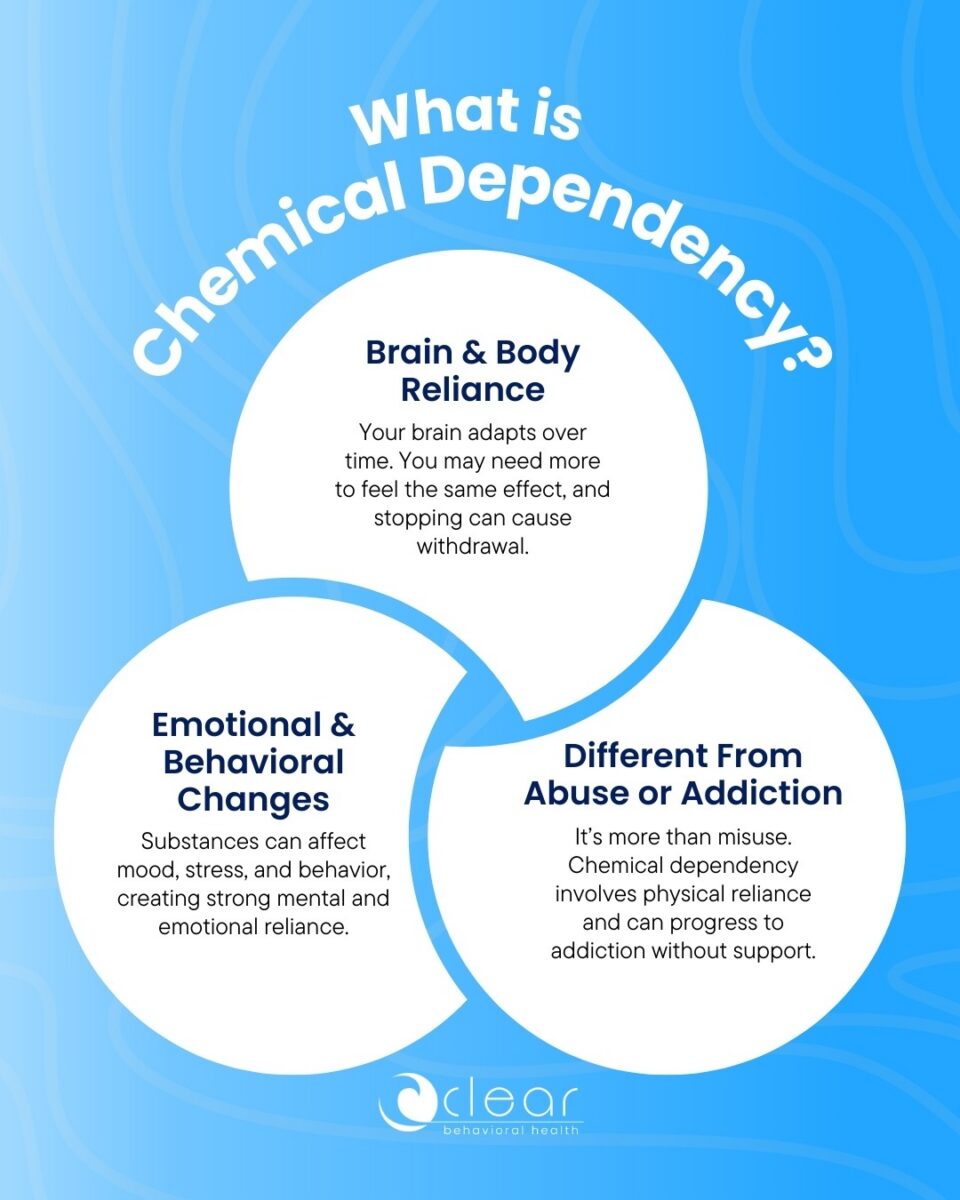
Chemical dependency refers to a condition where your body and brain become reliant on a substance, making it difficult to stop using without experiencing withdrawal symptoms or intense cravings.
When you develop chemical dependence, your brain adapts to the presence of a substance. Over time, you may need more of a drug or more alcohol to achieve the same effect, and stopping suddenly can lead to uncomfortable or even dangerous withdrawal symptoms.
Researchers have found that repeated substance use changes brain systems involved in motivation, stress, and reward, which helps explain why dependency can feel so powerful and difficult to overcome [2].
Newer research continues to show that chemical dependency affects stress-response systems and emotional regulation in the brain, which can increase cravings and make relapse more likely even after someone stops using substances [5]. These changes help explain why recovery often requires structured treatment and ongoing support rather than willpower alone.
What does chemical dependency look and feel like?
Chemical dependency can involve:
- Physical withdrawal
- Emotional reliance on a substance
- Increasing tolerance
- Changes in mood and behavior
- Difficulty stopping drug use or drinking
Both illegal drugs and legal substances can lead to chemical dependency, including alcohol, pain pills, benzodiazepines, stimulants, nicotine, marijuana, and more.
Chemical dependency is often the early stage of what may eventually develop into drug addiction or alcoholism, but recognizing it early creates an opportunity to seek treatment before the disorder becomes more severe.
What is the difference between substance abuse and chemical dependency?
Substance abuse refers to harmful patterns of substance use, while chemical dependency refers to physical and psychological reliance on a substance.
You may be engaging in substance abuse when your drug use or drinking begins causing problems in your life. These problems may involve work, school, finances, health, or relationships.
Chemical dependency develops when your body becomes dependent on a substance on a regular basis. At this stage, stopping often leads to withdrawal symptoms, and you may feel uncomfortable or anxious without the substance.
Many people move from substance abuse to chemical dependence gradually. What begins as casual drinking or occasional cocaine use can become more frequent until the substance becomes part of daily life.
Understanding this difference helps you recognize when substance use is becoming more serious and when it may be time to seek treatment programs or substance abuse services.
Related: Substance Abuse Evaluation
What’s the difference between addiction and chemical dependency?
Addiction and chemical dependency describe different aspects of the same condition, but they are not identical.
Chemical dependency focuses on how your body becomes dependent on a substance. Withdrawal symptoms, tolerance, and physical adaptation are key features of chemical dependence.
Addiction, on the other hand, refers to the compulsive behaviors and loss of control that develop around substance use. You may continue using drugs or alcohol even when you know they are causing problems.
Some people develop chemical dependency on prescription drugs without engaging in destructive addictive behaviors. For example, a patient who takes opioid pain pills after surgery may become physically dependent even when using the medication as prescribed.
Most people who are addicted, however, also have chemical dependency.
Modern research shows that substance use disorder develops through a combination of biological, environmental, and psychological factors, which is why treatment often needs to address both physical dependence and underlying mental health challenges [3].
Related: Understanding the Science of Addiction
How chemical dependency develops
Chemical dependency rarely appears overnight. It often develops through patterns of substance use that begin in ordinary or understandable ways.
Prescription medications
Many cases of chemical dependency begin with legitimate medical treatment.
You might receive prescription drugs such as opioid pain pills, benzodiazepines for anxiety, or stimulants for ADHD. These medicines can be effective when used appropriately, but they also carry risks for dependence.
Over time, your body can adjust to the presence of these substances, making you feel uncomfortable or anxious when you stop taking them. You may begin to rely on the medication not only for its intended purpose but also to feel normal.
This process can happen even when following medical advice.
Related: Understanding and Overcoming Prescription Drug Addiction
Recreational substance use
Chemical dependency can also develop through recreational drug use and social drinking.
What begins as occasional drinking with friends or using marijuana socially may gradually become more frequent. Some people start using cocaine, party drugs, or mixing alcohol and drug combinations on weekends before the pattern becomes part of everyday life.
Many young people, college students, and working adults develop dependency this way without recognizing the warning signs early on.
Self-medicating mental health symptoms
Some people develop chemical dependence while trying to manage difficult emotions or untreated mental health concerns.
You might use alcohol to cope with anxiety, use marijuana to reduce stress, or rely on stimulants to improve focus and productivity. Someone experiencing depression may turn to drugs as a way to escape uncomfortable feelings.
Substances may temporarily relieve symptoms, but repeated substance use often worsens mental health over time and increases the risk of dependency.
Related: Self Medicating to Deal with Stress
Withdrawal symptoms and safety risks
One of the clearest signs of chemical dependency is withdrawal. Withdrawal symptoms occur when your body reacts to the absence of a substance it has become dependent on.
You might notice physical and emotional symptoms such as:
- Restlessness
- Anxiety
- Irritability
- Sleep problems
- Sweating
- Nausea
- Mood changes
These symptoms can make it extremely difficult to stop using on your own.
Related: Alcohol Detox and Withdrawal: Symptoms and Treatments
Chemicals that require professional support
For some substances, withdrawal can be dangerous. Withdrawal from alcohol and benzodiazepines can cause serious medical complications, including seizures, and should be monitored by professionals. Stopping opiates or opioids like heroin, fentanyl, or oxycodone, on the other hand, might not carry the same health risks, but withdrawal symptoms are uncomfortable and can lead you back to using these substances without medical supervision that ensures a safe and comfortable detox.
Medical detox allows your body to stabilize safely while clinicians manage withdrawal symptoms and monitor your health. Research shows that medically supervised detox helps improve safety and increases the likelihood that a patient continues into ongoing treatment [4].
Related: The Dangers of Detoxing From Alcohol at Home
What is a chemical dependency evaluation?
A chemical dependency evaluation is a structured assessment used to determine whether you may have substance dependence or a substance use disorder.
During a chemical dependency evaluation, a clinician or drug counselor will talk with you about your substance use, medical history, and how drugs or alcohol may be affecting your life.
They may ask about:
- Patterns of drinking or drug use
- Physical and psychological symptoms
- Past attempts to stop
- Impact on family members
- Work or school difficulties
These evaluations help determine the most appropriate level of treatment, whether that involves outpatient counseling, structured programs, or medical detox and rehab.
You don’t have to face chemical dependency alone. Reach out to our expert team for support and guidance whenever you’re ready.
Chemical dependency treatment and recovery
At Clear Behavioral Health, we understand how overwhelming chemical dependency can feel. But substance abuse, drug addiction, and alcoholism do not have to define your future.
Depending on your needs, treatment programs may begin with medical detox to help your body manage withdrawal symptoms safely. From there, inpatient rehab and outpatient addiction programs help you understand the patterns behind your substance use and build skills for long-term recovery.
Our addiction treatment services include:
- Medication and withdrawal management
- Individual therapy
- Group therapy
- Family support and involvement
- CBT and DBT
- Holistic therapies like mindfulness and yoga
These approaches help you understand the behaviors and triggers that lead to substance abuse while strengthening your ability to stay in recovery. If you or a loved one is experiencing chemical dependency, contact our team of substance use experts today. We provide a full continuum of care in the Los Angeles area, spanning from drug and alcohol detox in Redondo Beach to drug rehab in Gardena, as well as dual diagnosis therapy and outpatient addiction treatment programs in the South Bay.
With the right support, you can rebuild your life, improve your relationships, and move forward with confidence in recovery. Substances and chemical dependency do not have to control your future. You can start recovery as soon as you’re ready.
References
- 2024 National Survey on Drug Use and Health (NSDUH) releases. (n.d.). CBHSQ Data. https://www.samhsa.gov/data/data-we-collect/nsduh-national-survey-drug-use-and-health/national-releases/2024
- National Institute on Drug Abuse (NIDA). (2020, July 6). Drugs and the brain. National Institute on Drug Abuse. https://nida.nih.gov/publications/drugs-brains-behavior-science-addiction/drugs-brain
- National Institute on Drug Abuse. (2024). Understanding drug use and addiction.
https://nida.nih.gov/publications/drugfacts/understanding-drug-use-addiction - National Institute on Drug Abuse (NIDA). (2018, June 6). Understanding Drug Use and Addiction DrugFacts. National Institute on Drug Abuse. https://nida.nih.gov/publications/drugfacts/understanding-drug-use-addiction
- Substance Abuse and Mental Health Services Administration (US). (2006). 1 Overview, essential concepts, and definitions in detoxification. Detoxification and Substance Abuse Treatment – NCBI Bookshelf. https://www.ncbi.nlm.nih.gov/books/NBK64119/#ch1.s8