
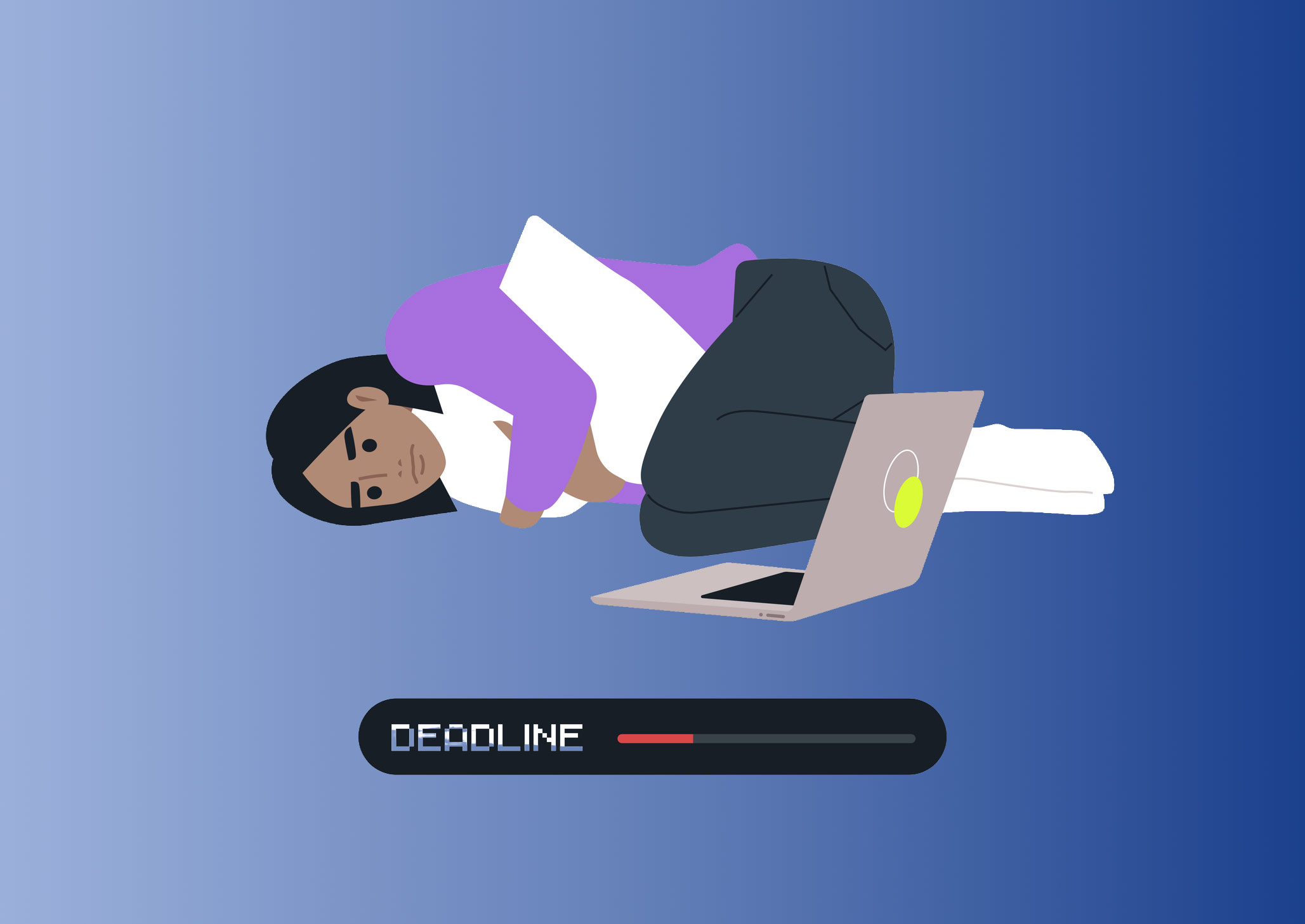
Haunted by that pile of tasks you keep avoiding? It isn’t a laziness problem. Procrastination and anxiety can trigger our freeze response. Avoidance gives us short-term relief, but over time, it makes anxiety worse.
People around you may treat it like a character flaw. In reality, it’s a common anxiety response that can feel like a cruel cycle for people who already feel overwhelmed.
Why Procrastination and Anxiety Happen
Around 20% to 25% of adults procrastinate.1 For some, chronic procrastination can be severe and debilitating. Has procrastination been holding you back? There’s usually more going on beneath the surface. Here’s what’s really happening.
Is Procrastination a Symptom of Anxiety?
Aaron Mostin, Program Director at Clear Behavioral Health, works with people navigating anxiety every day and has seen why so many people struggle to get started on a task:
“A majority of the time, procrastination does not come from laziness, it’s usually a result of anxiety.”
Procrastination is often an anxiety response rooted in negative emotions like fear, self-doubt, and dread. Action invokes fear of the unknown, and your brain naturally wants to protect you from unknown threats. Avoidance is a temporary way to feel safe.
This is especially true for people living with mental health conditions like generalized anxiety disorder or social anxiety, where everyday tasks can feel disproportionately threatening to their safety.
Related: What is Anxiety?
What Is the Link Between Anxiety and Procrastination?
Why do people procrastinate when they feel anxious? Different emotional drivers make people freeze up.2 Many have a fear of change or are afraid of making a mistake. Self-doubt also plays a role.
Pressure can also make some people shut down. After all, you can’t disappoint people with the result if you never try.
You could also be overwhelmed. Procrastination is often born of not knowing where to start.
There are many different reasons why people develop anxiety-related procrastination as a coping technique. Some examples might be:
- Fear of failure
- Fear of change
- Fear of success
- Being scolded for mistakes in childhood
If these fears are affecting your life, call our compassionate team today to learn healthy ways to cope.
Unpacking why moving forward scares you is a great first step. The answer waiting at the end is that your brain is trying to protect you. It’s just using the wrong technique.
Why Does Anxiety Make You Avoid Tasks?
Avoidance creates short-term relief from emotional discomfort.3 You feel free once a duty is pushed off your plate. Your brain is only focused on removing the stressor. It doesn’t take into account what’s actually best.
Procrastination creates more stress over time. The repercussions and disappointments of not completing important tasks eventually hit. When they do, you’re left feeling worse about yourself.
There are also some serious real-world repercussions. Anxiety-rooted procrastination can impact your grades or career. It’s a common reason why very “smart” people fail out of school or lose jobs.
The Anxiety and Procrastination Cycle Explained
People with procrastination caused by anxiety often experience distress about deadlines. Ruminating over the task robs them of joy. They may spend more time fearing the task than it would take to actually complete it. There are actually two patterns:
- Avoidance until the deadline passes: The first group simply ignores the task until the deadline for it to be done passes. This looks like not turning in homework or canceling a visit from a friend instead of cleaning the house in time.
- Completing tasks last-minute under pressure: The second group pulls through at the last minute. This can look like waiting until the night before a major paper is due to start writing or cleaning the whole house an hour before guests arrive.
Recognizing your procrastination pattern is the first step. If you think anxiety is causing it, call our team of experts today to help you break this pattern.
In these cases, the person is actually counting on adrenaline and panic to kick in. The stress spike provides an incentive for quickly getting “the impossible” done.
The downside to this is that the person enters an intense, high-cortisol state to achieve this. They are often left exhausted, depleted, and in need of rest. The up-and-down cycle is terrible for mental and physical health.
Both types of procrastinators are still riding the same pattern. Their avoidance gives them short-term relief. However, relief quickly gives way to guilt that spikes anxiety levels.
Mostin also points to shame as the hidden engine keeping the cycle going:
“The shame about not doing them makes the cycle worse… the more you avoid, the more guilty you feel, and then you avoid it even more.”
What Procrastination and Anxiety Feel Like
Procrastination and anxiety can be felt in the body. They can also “shut off” or override the other feelings we would normally feel.
Why Do I Feel More Anxious After I Put a Task Off?
Procrastination compounds anxiety. The initial “freeze” anxiety of the looming task feels terrible in the moment.
The truth is that the anxiety that comes with running out of time can be far more detrimental. This can raise adrenaline and cortisol.4 Many people become physically ill over time because of the effects.
Feeling Overwhelmed and Unable to Start
Mental overload is the first stage of procrastination that comes from anxiety. It isn’t that a person doesn’t want to start. They want very badly to start.
The anxiety they feel can override the logical part of their brain that would make it easy to know where to start. The task’s details feel too large and blurry to make sense of things.
Without anxiety, the task comes into clearer focus. You’re able to see what parts should be prioritized.
Guilt, Dread, and Task Paralysis
Why does anxiety make you avoid tasks? Procrastination and anxiety can make it seem impossible to feel settled. A person may feel agitated.
While they appear to be wasting time or enjoying distractions from the outside, their interior thoughts are buzzing. They cannot enjoy anything — even an anxiety-provoking task feels easier than the guilt of avoidance.
The reality is that they are constantly running over where to start in their brain. Task paralysis makes it impossible for them to actually make a plan.5
In addition, it can feel like time is speeding up all around them. They constantly obsess over how much time is left before the looming deadline.
Some people take a passive approach to procrastinating. This can look like binge-watching shows or napping. Others will start “a million other projects” or prioritize smaller issues.
How to Break the Anxiety-Related Procrastination Cycle
Wondering how to stop severe procrastination and anxiety from taking over? Here are some tips anyone can take to feel more in control.
How to Start Completing Tasks When Anxiety Gets in the Way
It’s empowering to learn how to start a task when you feel anxious. Normalize small steps! Be comfortable with doing just one thing instead of feeling like you need to get it all done in one step.
Set clear, small goals that are actually achievable. This can be as simple as working on something for 10 minutes before walking away.
How to Start an Anxiety-Provoking Task
Anxiety makes you want to bury your head in the sand. Empowerment helps you know you can handle any task.
Remember that it’s okay to “do it” anxiously. Most great things in life have been done with a little fear.
A plan also helps. Consider mapping out each step that you should be doing by the day or hour to get to the end goal.
Long-Term Strategies for Chronic Procrastinators (Including Therapy)
The strategies below are designed to help you create sustainable routines that reduce anxiety and procrastination, and keep you moving forward, even on your hardest days.
- Live by the idea that “done is better than perfect.” Just starting is often enough to create momentum.
- Positive self-talk is also important. Remind yourself that this is fully within your reach.
- Timers and planning tools are also great. They keep you “on schedule” when your emotions get the best of you. For example, the Pomodoro method breaks tasks into 25-minute chunks for better time management.6
- Talking to a friend, peer, or family member can also provide a helpful push — but if anxiety is the root cause, professional support makes a bigger difference.
If your long-term strategies no longer work, talk to our support team today to find a solution that works for you.
You Don’t Have to Stay Stuck
Procrastination and anxiety feed each other, but that cycle can be broken. Understanding why your brain defaults to avoidance is the first step. Building better habits and tools is the next. And for a lot of people, getting real support is what finally makes the difference.
If anxiety is what’s been keeping you frozen, you don’t have to white-knuckle your way through it alone. Whether you’re looking for anxiety treatment, an outpatient mental health program that fits around your life, or a virtual IOP you can access from anywhere in California, there are options that meet you where you are.
Taking that first step is hard. But it’s a lot easier when you have the right people in your corner.
Frequently Asked Questions
How to stop severe procrastination?
Accountability tools like small steps, timers, or planning apps are a great start. Some chronic procrastinators also benefit from therapy that gets to the root of the anxiety driving the avoidance.
Why does procrastination make anxiety worse?
Procrastination creates a cycle that’s hard to shake. Avoiding important tasks brings short-term relief, but guilt kicks in fast. And when deadlines get close, adrenaline and cortisol follow, making everything feel worse.
Are anxiety and procrastination related?
Yes, procrastination is often the result of anxiety. Many people are held back by self-doubt, fear of failure, or fear of criticism. For those living with generalized anxiety or social anxiety, the cycle can be especially hard to break.
References
- Pérez-Jorge D, Hernández-Henríquez AC, Melwani-Sadhwani R, Gallo-Mendoza AF. Tomorrow Never Comes: The Risks of Procrastination for Adolescent Health. Eur J Investig Health Psychol Educ. 2024 Jul 26;14(8):2140-2156. doi: 10.3390/ejihpe14080143. PMID: 39194937; PMCID: PMC11353834. https://pmc.ncbi.nlm.nih.gov/articles/PMC11353834/
- Steel, P. (2007). The nature of procrastination: A meta-analytic and theoretical review of quintessential self-regulatory failure. Psychological Bulletin, 133(1), 65–94. https://doi.org/10.1037/0033-2909.133.1.65
- Hofmann, S. G., & Hay, A. C. (2018). Rethinking avoidance: Toward a balanced approach to avoidance in treating anxiety disorders. Journal of Anxiety Disorders, 55, 14–21. https://doi.org/10.1016/j.janxdis.2018.03.004
- Barel E, Shahrabani S, Mahagna L, Massalha R, Colodner R, Tzischinsky O. State Anxiety and Procrastination: The Moderating Role of Neuroendocrine Factors. Behav Sci (Basel). 2023 Feb 27;13(3):204. doi: 10.3390/bs13030204. PMID: 36975229; PMCID: PMC10045520. https://pmc.ncbi.nlm.nih.gov/articles/PMC10045520/
- Aupperle, R. L., & Paulus, M. P. (2010). Neural systems underlying approach and avoidance in anxiety disorders. Dialogues in Clinical Neuroscience. https://pubmed.ncbi.nlm.nih.gov/21319496/
- Pomodoro Technique: A Mind Training for Studying and Managing Time Better – Charlie | Your Student Blog. (Aug, 2023). https://charlie.csu.edu.au/2023/08/22/pomodoro-technique-a-mind-training-for-studying-and-managing-time-better/