

Key Takeaways about Heroin Detox
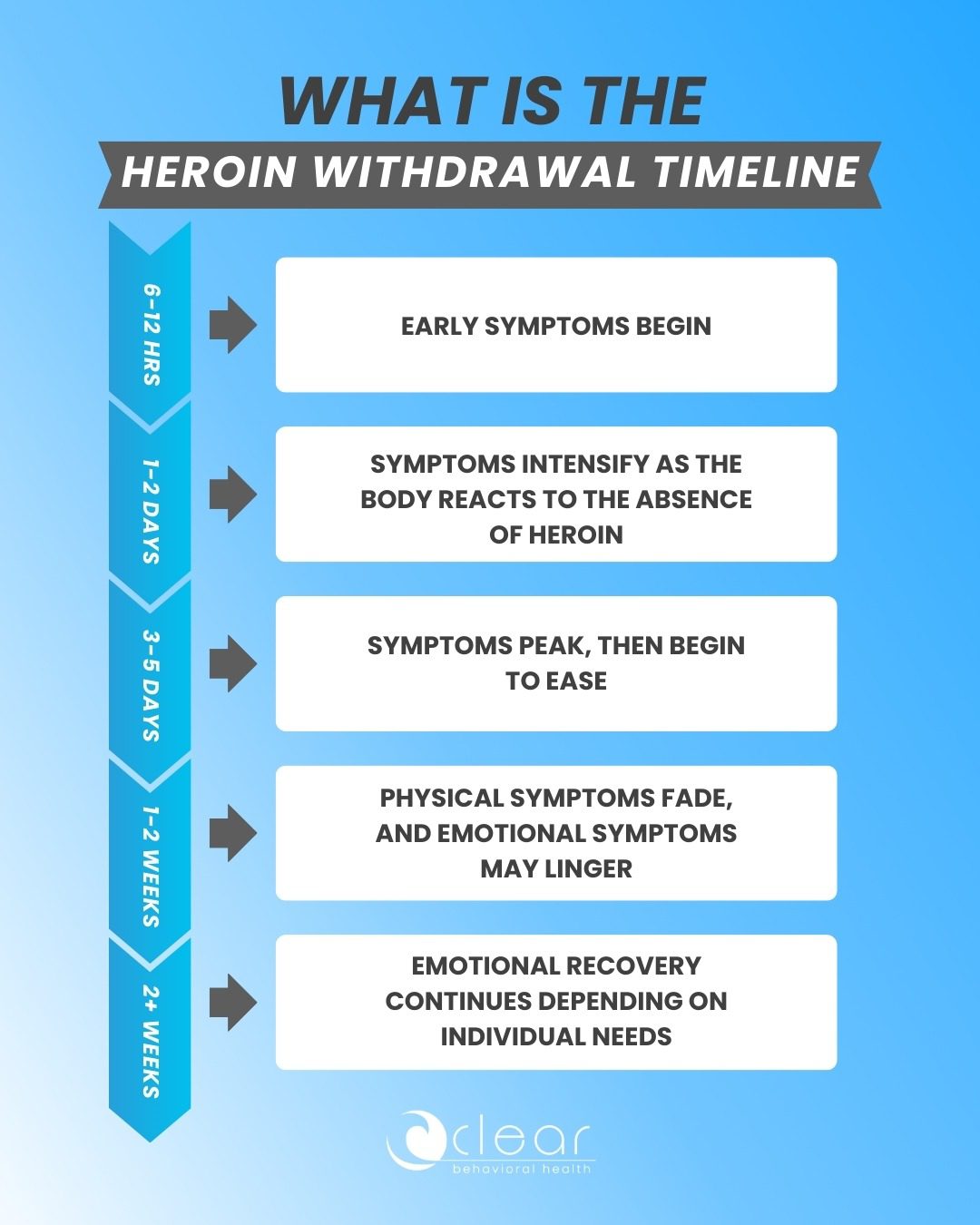
A general heroin detox timeline often looks like this:
- 6 to 12 hours after last use: Early symptoms begin
- Day 1 to 2: Symptoms intensify as the body reacts to the absence of heroin
- Day 3 to 5: Symptoms peak, then begin easing
- Week 1 to 2: Physical symptoms fade, and emotional symptoms may linger
- Beyond 2 weeks: Emotional recovery continues, depending on individual needs
At Clear Behavioral Health, detox is personalized and supportive. Your care team focuses on safety, dignity, and comfort so you never feel alone in the process.
Heroin Detox Timeline: Symptoms, What to Expect, and How to Prepare for Recovery
If you or a loved one is preparing for heroin detox, you might be feeling anxious, scared, or unsure about what your body and mind are about to go through. These feelings are completely normal. Heroin withdrawal can be uncomfortable, but the process is also the first step toward healing and stability. With the right support, detox becomes safer, calmer, and far more manageable.
At Clear Behavioral Health, our team is here to guide you with compassion, medical expertise, and steady reassurance. This guide walks you through the heroin detox timeline, what symptoms look like, how long detox takes, and how Clear Behavioral Health can support you during each stage.
What Is Heroin Detox and Why Does It Matter?
Beginning heroin detox means allowing your body to clear heroin and other opioids from your system. This is a major physical and emotional shift, and many people benefit from structured withdrawal management to help monitor symptoms and stay safe during this phase. Detox is the point where your brain begins to adjust to functioning without the substance, which is why withdrawal follows. Even though withdrawal is difficult, it is also a sign that your body is working hard to heal.
Many people consider detoxing at home. Although this is understandable, at-home detox can be unsafe. Withdrawal symptoms can escalate quickly, cravings can be intense, and complications may occur without warning. Medically supervised heroin detox ensures that someone is watching over you, managing your symptoms, and keeping you stable and comfortable.
At Clear Behavioral Health, detox is personalized and supportive. Your care team focuses on safety, dignity, and comfort so you never feel alone in the process.
What Is the Heroin Withdrawal Timeline?
Understanding the heroin withdrawal timeline helps you prepare for what your body and emotions may experience. Although everyone’s detox looks different, most people move through a predictable sequence of withdrawal stages. Symptoms usually begin within hours, peak within the first few days, and then gradually improve. According to the National Institute on Drug Abuse, short acting opioids like heroin tend to produce withdrawal that begins quickly and resolves faster than long acting opioids 1.
Stage 1 – Early Withdrawal (6 to 12 Hours After Last Use)
The first stage of heroin withdrawal can begin surprisingly fast. Since heroin is a short acting opioid, the body quickly notices when it is no longer present. This period is often marked by discomfort that begins mildly and slowly increases. Early opioid withdrawal can include both physical and emotional symptoms that require careful monitoring 2.
Early withdrawal symptoms may include:
- Anxiety
- Sweating
- Runny nose
- Muscle aches
- Restlessness
- Cravings
Although this stage can feel difficult, medical support makes it far more manageable and reduces the risk of relapse.
Stage 2 – Peak Withdrawal Symptoms (Day 1 to 3)
The peak stage is typically the most challenging part of the heroin detox timeline. Your body is reacting strongly to the absence of heroin, and symptoms can feel overwhelming without support. However, with professional care, this stage is safe and controlled. The American Society of Addiction Medicine emphasizes that medication-assisted treatment can significantly ease opioid withdrawal symptoms during this period 3.
Common peak symptoms include:
- Nausea
- Vomiting
- Diarrhea
- Chills or sweating
- Muscle or bone pain
- Insomnia
- Irritability or agitation
- Intense cravings
Clear’s medical team provides 24/7 monitoring to help you stay hydrated, stable, and as comfortable as possible.
Stage 3 – Late Withdrawal (Day 3 to 5)
During late withdrawal, the most intense physical symptoms begin to decline. Many people feel a noticeable shift during this period. Although your body is recovering, emotional symptoms may still feel strong. This is a good time to prioritize nutrition, hydration, and rest. Support and encouragement are especially important here.
| Physical symptoms improve | Emotional symptoms may continue |
| Nausea decreases | Anxiety |
| Muscle aches lessen | Irritability |
| Sleep improves | Low mood |
| Appetite returns | Cravings |
You may begin to feel more like yourself, even if your emotions still feel sensitive or unsteady.
Stage 4 – Post-Acute Withdrawal Symptoms (Week 1 to 2 and Beyond)
After the physical withdrawal fades, some individuals experience post-acute withdrawal syndrome. This stage is not dangerous, but it can be emotionally challenging. Post-acute withdrawal syndrome can appear in waves, improve with treatment, and gradually fade as your brain continues to rebalance. The American Society of Addiction Medicine notes that post-acute withdrawal syndrome is common during opioid recovery and varies from person to person 4.
Common post-acute withdrawal syndrome symptoms include:
- Mood swings
- Low energy
- Sleep issues
- Difficulty concentrating
- Intermittent cravings
With ongoing support and structure, this stage becomes significantly easier to manage.
What are the Factors That Affect the Heroin Detox Timeline?
Every detox is unique. There is no universal timeline because your body, your history, and your health all influence your personal withdrawal experience. These factors are not a reflection of your strength or willpower. They simply represent your individual needs.
| Factor | How It Affects Detox |
| Frequency of use | More frequent use can increase withdrawal length |
| Amount used | Higher doses may intensify symptoms |
| Duration of use | Long term use may lead to a longer detox process |
| Polysubstance use | Withdrawal may become more complex |
| Co-occurring disorders | Anxiety, depression, or trauma can influence symptoms |
| Overall health | Physical health can speed or slow healing |
Contact Clear Behavioral Health today to start your detox journey.
What Heroin Detox Feels Like Physically and Emotionally
Detox is a whole body and whole mind experience. Many people do not realize how emotional withdrawal can be until they go through it. You are not doing anything wrong if you feel a mix of physical and emotional symptoms. This is normal, temporary, and treatable.
Physical symptoms
Physical symptoms may include:
- Muscle aches
- Cramping
- Sweating or chills
- Nausea
- Runny nose
- Difficulty sleeping
- Elevated heart rate
These symptoms usually improve quickly with medical support.
Emotional symptoms
Emotional symptoms often include:
- Anxiety
- Restlessness
- Irritability
- Mood swings
- Trouble focusing
- Cravings
You deserve support for both the physical and emotional aspects of withdrawal.
How Clear Behavioral Health Supports Safe Heroin Detox
Clear Behavioral Health provides a medically supervised and emotionally supportive environment during detox. Your care team focuses on your safety and comfort. Treatment may include:
- Medical monitoring
- Medication assisted treatment
- Comfort focused care
- Dual diagnosis support for mental health
- Gentle, compassionate guidance
Your detox plan is centered around your needs and long term recovery goals.
What Happens After Detox – The Next Steps in Recovery
Detox prepares the body for healing, but recovery continues after withdrawal ends. At Clear Behavioral Health, you can transition into:
- Residential treatment
- Partial Hospitalization Program
- Intensive Outpatient Program
- Individual and group therapy
- Medication management
- Relapse prevention and aftercare
These next steps build stability, coping skills, and long term support.
When to Seek Immediate Help for Heroin Withdrawal
You should seek medical help immediately if you experience:
- Severe vomiting
- Dehydration
- Rapid heart rate
- Suicidal thoughts
- Severe anxiety or agitation
- Inability to sleep for multiple days
Help is available before symptoms worsen. You do not need to wait. Explore heroin addiction treatment options in Los Angeles.
How to Start Heroin Detox at Clear Behavioral Health
Beginning detox is simple.
- Call Clear Behavioral Health
- Complete a confidential assessment
- Receive a personalized detox plan
- Start safe and comfortable detox with our expert team
You deserve care that feels human, gentle, and hopeful. Clear Behavioral Health is here to support you every step of your journey.
Receive a personalized heroin detox plan designed around your needs and recovery goals.
Frequently Asked Questions
What are the signs of heroin withdrawal?
Heroin withdrawal can start sooner than you might expect, and the symptoms can feel both physical and emotional. You may be entering withdrawal if you notice anxiety, muscle aches, frequent yawning or a runny nose, restlessness, cramping, nausea, dilated pupils, goosebumps, or trouble sleeping.
These symptoms can escalate quickly, which is why early support makes such a difference. If you’re starting to notice these changes, reaching out for help right away can make the process safer and more manageable. Contact Clear Behavioral Health today to get support for every step of your journey.
What are the worst days of heroin withdrawal?
The worst days of heroin withdrawal typically occur between days 1 and 3. This is when acute symptoms like nausea, sweating, insomnia, anxiety, and muscle aches peak. Because heroin leaves the body quickly, withdrawal can start within hours and escalate fast. Medical detox helps manage these early severe symptoms and reduces the risk of complications.
What medications help with heroin withdrawal?
FDA-approved medications for heroin withdrawal treatment are buprenorphine, Suboxone, and methadone. These medications are part of Medication Assisted Treatment (MAT) and help stabilize brain chemistry, reduce cravings, and lessen withdrawal discomfort. When used in a supervised detox setting, they significantly improve safety and treatment outcomes.
What happens after heroin detox?
After completing heroin detox, you move into the next phase of treatment. Most people transition to residential treatment, partial hospitalization, or intensive outpatient programs. This step is essential because detox only addresses the physical dependence. Continued therapy and support help rebuild coping skills, prevent relapse, and treat co-occurring mental health needs.
Can heroin withdrawal be deadly?
Heroin withdrawal itself is rarely fatal. However, the process can still be dangerous because severe vomiting, dehydration, electrolyte imbalance, or heart complications can occur without supervision. The most significant risk occurs when detox is attempted alone. Professional medical detox lowers these risks and ensures that symptoms are monitored and treated quickly.
Why is professional detox important?
Professional heroin detox programs are important because they provide round-the-clock support, medication management, and medical monitoring. This increases comfort and safety while lowering the risk of relapse. A medically supervised opioid detox process helps stabilize your body and manage withdrawal symptoms safely. Detoxing with trained staff improves long-term success rates because it helps stabilize your body and prepares you for the next stage of addiction treatment.
Is home detox safe?
No. Home heroin detox is not considered safe. Withdrawal symptoms can escalate rapidly, especially during the first few days. Without medical professionals to monitor vital signs or provide medications, complications like dehydration or seizures can become emergencies. A supervised medical detox is strongly recommended for anyone withdrawing from heroin.
References:
- National Institute on Drug Abuse. (2023). Understanding drug withdrawal and detoxification.https://nida.nih.gov/publications/drugs-brains-behavior-science-addiction/treatment-recovery
- Substance Abuse and Mental Health Services Administration. (2020). Withdrawal management guidelines.https://www.asam.org/quality-care/clinical-guidelines/alcohol-withdrawal-management-guideline
- Kampman, K., and Jarvis, M. (2015). ASAM national practice guideline for medications in opioid addiction treatment. American Society of Addiction Medicine.https://www.asam.org/docs/default-source/practice-support/guidelines-and-consensus-docs/asam-national-practice-guideline-jam-article.pdf
- Brown, R., & Smith, J. (2023). Post-acute withdrawal syndrome. Journal of Addiction Medicine.https://pubmed.ncbi.nlm.nih.gov/36731102/