

Heading off to college or moving out for the first time is a major milestone for young adults, and an emotional one for parents, too. For teens and young adults, excitement often mixes with fear of the unknown.
Living away from home means new responsibilities, social pressures, and big changes. It’s normal for moving anxiety to surface during this transition, but there are ways you can support your child while encouraging independence.
If your child is struggling with anxiety during this transition, we are here to help. Contact us today to learn more about our
Teen anxiety treatment programs
Why do teens experience moving anxiety?
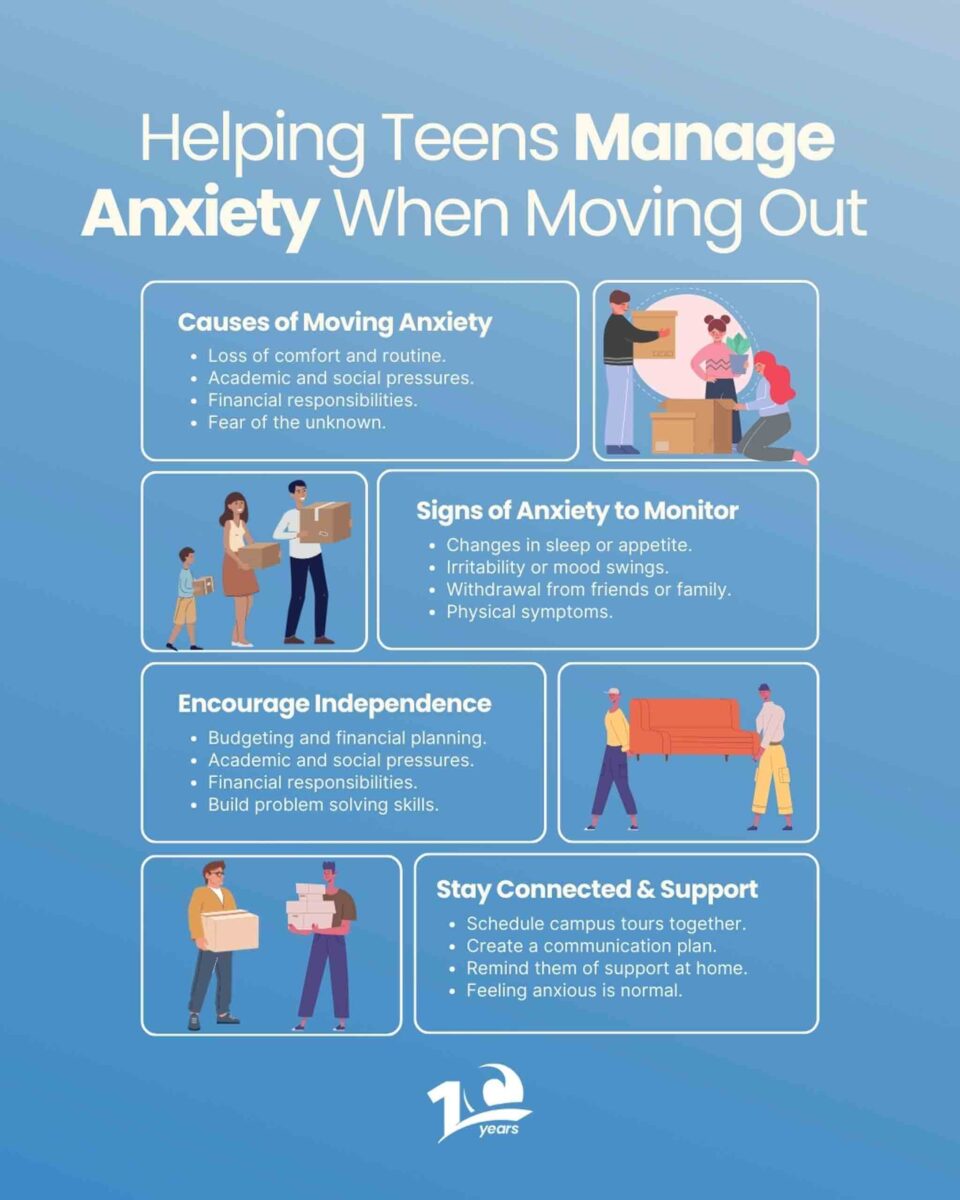
Moving can be anxiety-provoking for anyone; however, teens might be experiencing the dramatic change of leaving the nest for the first time and may feel overwhelmed. Here are some specific challenges young adults face when preparing to move away from home, as well as struggles they might experience while in college [1]:
- Loss of comfort and routine: Leaving the safety net of home is scary and unpredictable.
- Academic and social pressure: College brings new challenges, including an increased workload, harder classes, and having to make new friends.
- Financial stress: Worrying about money or managing responsibilities can trigger anxiety.
- Fear of the unknown: Not knowing what to expect in a new environment is stressful at any age.
Related: What is Anxiety?
Is it normal to feel anxious about moving out?
Big changes and major transitions like moving out and starting college are two exciting yet stressful life events. It is very normal to experience symptoms that impact your mental and physical health [2].
Related: 5 Anxiety Triggers for Teens
Mental health symptoms and signs of moving anxiety
Recognizing potential signs and symptoms of moving anxiety or other mental health conditions can light the path for constructive ways to overcome the stress of your teens’ moving process and prevent things from getting worse.
- Be mindful of any difficulty sleeping or drastic changes in their appetite.
- They may struggle with sudden mood swings and be more irritable.
- The thought of college life can lead to persistent worry and panic.
- It might be easier to isolate, withdraw from friends or family, and avoid preparing.
- There can be physical symptoms as well, such as headaches or stomachaches.
Related: Identifying the Signs of Anxiety in Teens – and When to Get Help
How do you support a child with anxiety during transitions?
Big transitions are hard, but there are things you can do as a parent to make the moving-out process smoother and less stressful [3].
Oftentimes, it starts with acknowledging their feelings and letting them know that it is completely normal to feel anxious. Beyond that, encouraging your teen to take steps to practice independence before they actually leave home can be beneficial. If they know how to budget, cook, and effectively manage their time, chances are they will feel more confident.
If you haven’t done so already, going on a campus tour together can make the change more exciting and less intimidating. Furthermore, creating a well-thought-out communication plan, such as weekly video calls, will enable them to feel supported while also maintaining their independence.
Lastly, helping your teen develop coping strategies can reduce moving anxiety and prepare them for any future challenges. Simple practices like journaling, mindfulness, and exercise are great tools to have when anxiety spikes.
When should I worry about my child’s anxiety?
It’s normal for your child to feel nervous about leaving home. But if moving anxiety is persistent, interferes with daily functioning, or leads to panic attacks or depression, it may be a sign that something bigger, like an anxiety disorder, is at play [4].
If the emotional support and preparation tips aren’t providing adequate relief, it might be time to seek professional help. At Clear Behavioral Health, we provide anxiety treatment programs in the Los Angeles, CA area for teens and young adults who can benefit from a higher level of therapeutic support.
We start with an in-depth assessment to determine the severity of your symptoms and identify the appropriate level of care for your unique needs. We offer an outpatient mental health program, a virtual intensive outpatient program so college students can access therapy remotely, as well as residential mental health treatment options if additional support is needed.
If your teen’s anxiety is holding them back from thriving, reach out today to learn more about our evidence-based treatment options and
Anxiety treatment for teens
Moving Forward With Confidence
Watching your child step into adulthood is both rewarding and emotional. While anxiety is common throughout this time, with the right tools, reassurance, and professional support when needed, your teen can navigate the transition with confidence.
If your teen could benefit from the support, contact Clear Behavioral Health today to learn more about our anxiety treatment options. We’d love to help your child manage anxiety and build resilience to succeed in this next chapter, and offer teen anxiety treatment programs throughout Los Angeles, CA, including El Monte, Santa Clarita, Van Nuys and Redondo Beach. Give us a call today to learn more about our programs.
References:
- Bay Atlantic University. (2024, September 30). 12 Problems college students face and how to Overcome them – Bay Atlantic University – Washington, D.C. Bay Atlantic University – Washington, D.C. https://bau.edu/blog/problems-college-students-face/
- Worsley, J. D., Harrison, P., & Corcoran, R. (2021). Bridging the gap: exploring the unique transition from home, school or college into university. Frontiers in Public Health, 9. https://doi.org/10.3389/fpubh.2021.634285
- Martinelli, K. (2025, February 5). How can we help kids with transitions? Child Mind Institute. https://childmind.org/article/how-can-we-help-kids-with-transitions/
- World Health Organization: WHO. (2023, September 27). Anxiety disorders. https://www.who.int/news-room/fact-sheets/detail/anxiety-disorders